
15 Feb Building Smarter, Faster, and More Resilient in Puerto Rico
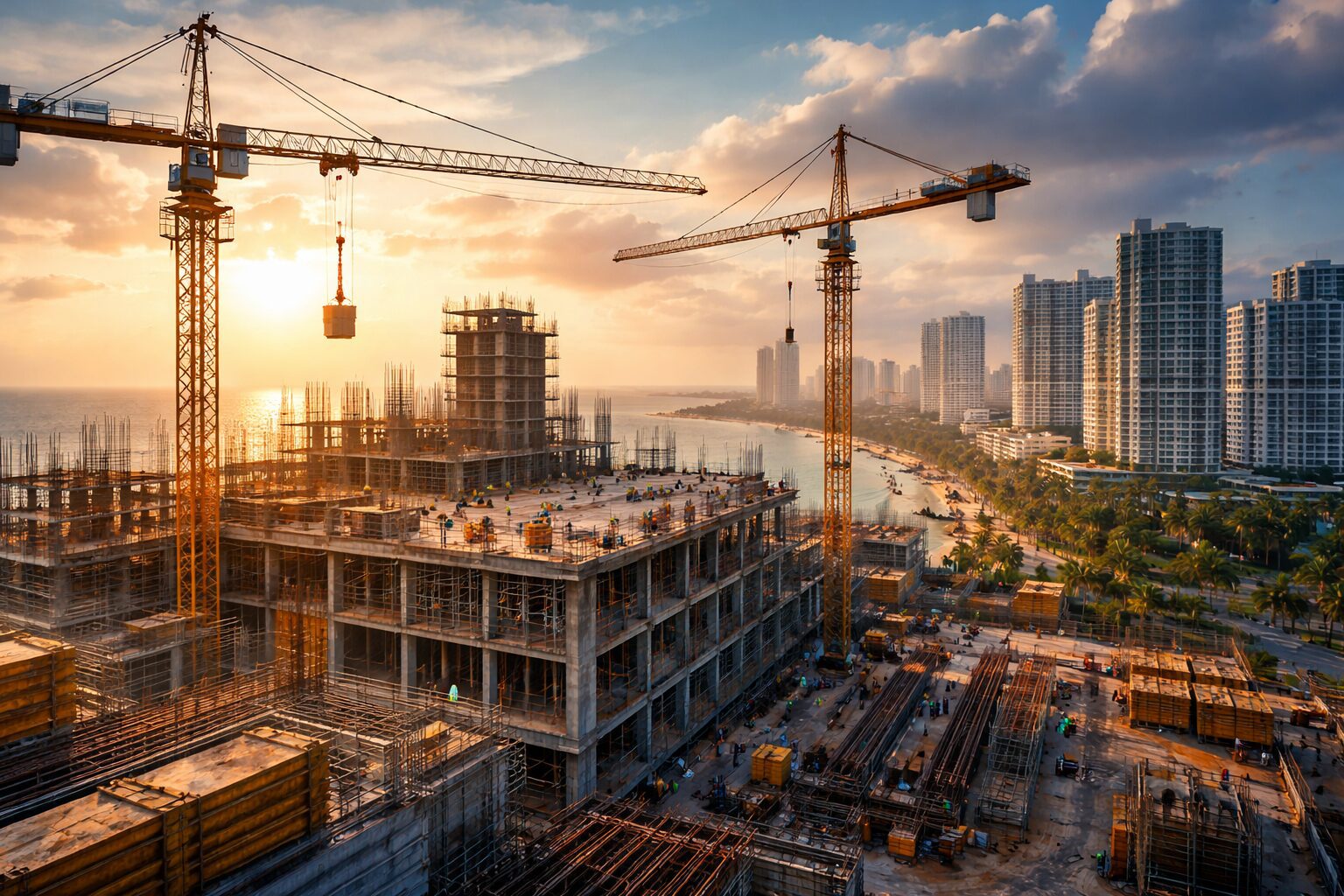
As Puerto Rico moves into 2026, the construction industry stands at a critical turning point. Years of recovery projects and federal investment have brought work and capital to the island, but they’ve also revealed how essential early collaboration, strategic planning, and resilient design are to long-term success. Today, Puerto Rico’s construction landscape isn’t just about completing projects — it’s about completing them with greater efficiency, greater foresight, and greater durability. Puerto Rico continues to receive significant federal funding for infrastructure and resilience work. For example, as of late 2024, the Federal Emergency Management Agency (FEMA) had obligated more than $22 billion for public assistance and hazard mitigation across the island in response to hurricanes, earthquakes, and other events since 2017. These funds are now tied to strict deadlines and performance expectations that require disciplined project execution and thorough documentation. (Source: FEMA Public Assistance Fund Data)
The private sector is also becoming more demanding. Developers in healthcare, commercial, industrial, and hospitality sectors are looking for delivery partners who understand the nuances of permitting, compliance, scheduling, and cost pressures unique to Puerto Rico. For owners in these sectors, delayed decisions or unclear risk planning often translate to budget overruns and longer timelines — outcomes that are no longer acceptable in a market that is increasingly competitive and performance driven. In response, companies that lead in 2026 are doing more than building structures — they are building smarter.
Smarter Means Starting Early
Smarter construction begins with early alignment among all project stakeholders. Architects, engineers, contractors, and owners must collaborate during the conceptual phases so that scope, cost, and schedule are informed by real market conditions and technical reality. When teams delay collaboration until after design documents are complete, they often discover conflicts, constructability issues, and compliance challenges that could have been prevented. These late-stage problems don’t just affect schedules — they affect long-term performance, operational continuity, and funding compliance. Owners are increasingly embedding strategic preconstruction services into their delivery models precisely to avoid these pitfalls. A strong preconstruction phase helps validate budgets, anticipate risks, and refine sequencing long before construction crews mobilize. This type of early investment pays dividends during implementation and is rapidly moving from a “nice-to-have” to an industry expectation.
Faster Through Integration and Communication
For years, Puerto Rico has seen the benefits of integrated delivery approaches such as design-build, where designers and builders work under a single contract from day one. Design-build reduces fragmentation, improves transparency, and accelerates decision cycles — all of which add up to measurable time savings on projects with complex requirements. Even in traditional design-bid-build models, faster outcomes come from purposeful integration, such as early contractor involvement during design and regular cross-discipline coordination sessions. When communication is disciplined and expectations are clear, delays caused by ambiguity or misalignment virtually disappear.
Technology also supports speed. Digital collaboration platforms, 4D scheduling tools, and cloud-based document management systems provide a real-time single source of truth for all team members. These tools help teams avoid field disputes and make informed decisions quickly, which is vital when timelines are tied to reimbursement schedules or operational opening dates.
Resilience Is a Requirement, Not an Add-On
When stakeholders talk about resilient construction in Puerto Rico, they’re referring to more than just weather resistance. Resilient buildings must accommodate future regulations, changing climate conditions, energy efficiency expectations, and long-term operational durability. This emphasis on resilience is reflected in policy too. For example, recent federal guidelines for infrastructure funding increasingly prioritize climate mitigation and adaptation measures that go beyond minimum code requirements. Owners and builders now need to think about thermal performance, backup power systems, flood mitigation strategies, and structural redundancy as part of the core design — not as secondary considerations. Projects must perform well years after occupancy, not just at ribbon cutting. Architects, engineers, and builders must be aligned to design and deliver facilities that stand up to evolving challenges. This type of integrated, forward-thinking planning is a defining feature of construction that is truly resilient.
Experience and Relationships Matter
In a complex construction environment like Puerto Rico’s, experience and industry relationships are not luxuries — they are competitive advantages. Organizations with a strong track record of successfully delivering state and federal work bring an understanding of compliance protocols, reporting requirements, and multi-agency coordination. Private owners benefit when their delivery partners understand local market dynamics, subcontractor availability, risk pricing, and performance expectations ahead of time rather than after the fact.
DDD Group brings decades of combined experience in both public and private sectors (our 26+ years of experience not only equip us to make informed decisions; they have also prepared us for virtually everything!). The firm’s deep connections across governmental agencies, engineering firms, design professionals, and construction leaders mean their teams can anticipate trouble points and keep projects moving forward rather than reacting to obstacles. As public funding becomes more performance-based and private investors demand higher certainty, these kinds of relationships will be decisive.
The Industry Is Shifting — Are You Ready?
Looking toward 2026, the future of construction in Puerto Rico will be defined by teams that build smarter, faster, and more resilient. Those who embrace early collaboration, integrated workflows, disciplined planning, and durable design will outperform competitors, secure better outcomes for owners, and deliver facilities that stand the test of time. The industry’s expectations have changed — and so must the way we approach every project.